Walking your Dog in Winter
A few top tips for safe Winter walking
Exercising our dogs in Winter can sometimes be a challenge, here are a few top tips to make life easier and safer for your dog.
A frosty start to the day will mean that your dogs muscles are cold from the fall in temperature and also a little stiff from resting all night so will need to gradually limber up before strenuous exercise.
It is really important to give between five and ten minutes lead walking and even more so for seniors and dogs that have had an injury in the past, before letting them off the lead to run. A warm, lengthened muscle is far more prepared for a faster pace and much less prone to injury.

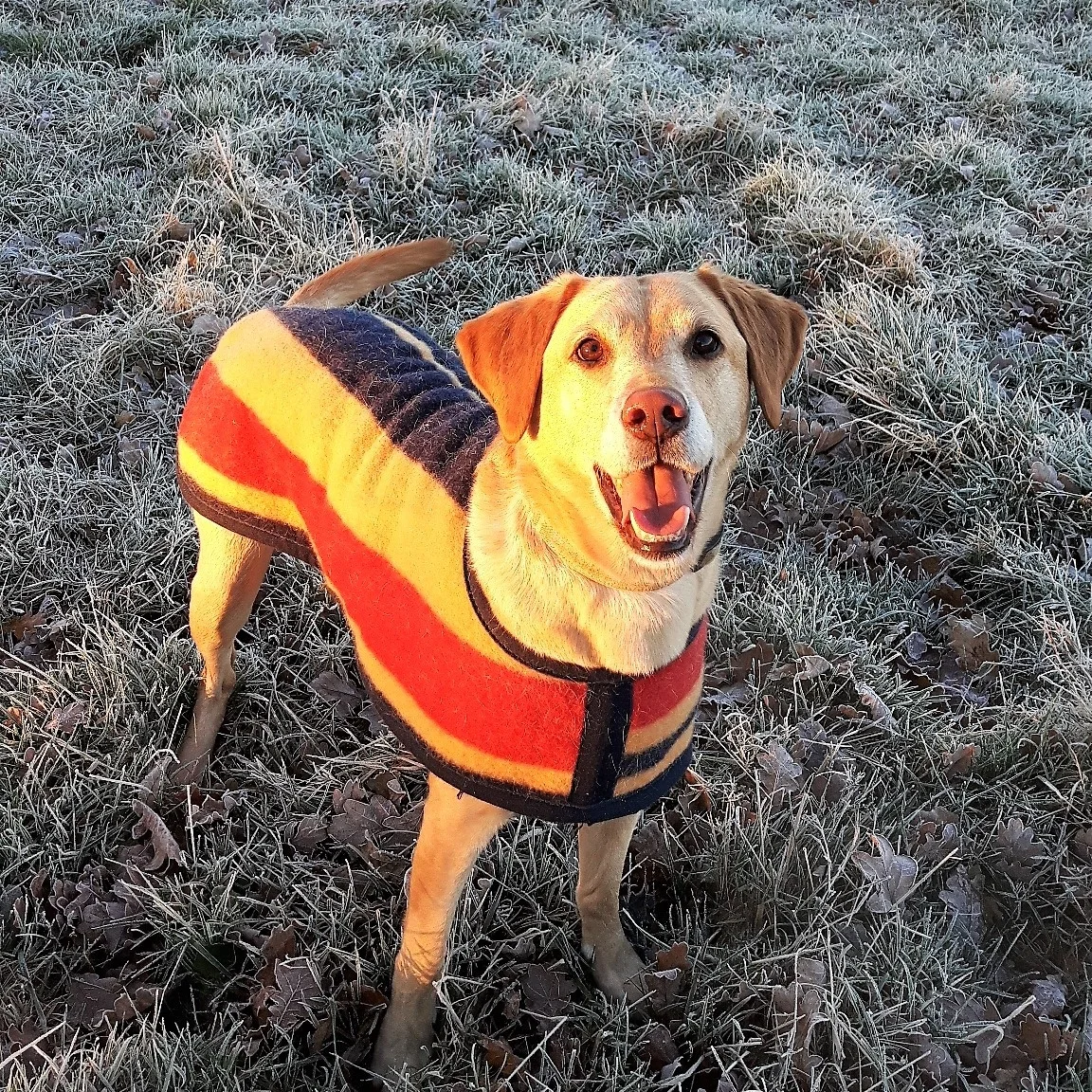
Old or arthritic dogs will benefit from a comfortable, warm coat to wear, this can always be removed if they start to get too warm once they have had a run around.
Be aware that the ground underfoot can change dramatically with a hard frost. The usual muddy track or gateway can become very treacherous and icy or any rutted ground frozen solid. This can cause damage to your dogs paws, joints and muscles should they run over it at speed. Also be careful when there has been snowfall and you are walking in an unfamiliar place as the snow can conceal many hidden dangers underneath. Snow can also bring out the hidden puppy even in the oldest of dogs so putting them on a long line can allow them some freedom to play without the danger of them overdoing it or injuring themselves.
If you have to walk on pavements and grit has either been laid down or spread across from the gritting lorry, then make sure you wash your dogs paws, legs and undercarriage off immediately with luke warm water on returning home, followed by towel drying as they are less likely to lick their legs if they are dry. When the pads are dry a paw balm can be rubbed in to avoid the pads cracking or becoming sore.
Here are 2 natural products that I wouldn’t be without at any time of the year but are particularly useful in Winter. All can be found on the shop.
https://www.hedgerowhounds.co.uk/products/green-clay
https://www.hedgerowhounds.co.uk/products/adore-the-paw-balm
If you walk your dog in the late afternoon or evening then remember to wear some sort of reflective clothing and also something on your dogs collar or harness. There are discs and collars that contain a battery and can be illuminated at the touch of a button. These are useful if you intend to let your dog off the lead, as you can see where the dog is at all times or if you mistime your walk and suddenly find you are walking back in fading light.
Be extremely vigilant of the dangers of anti-freeze, which can either be spilled or sometimes end up in puddles from a passing vehicle. If you are walking in an area where this could be a possibility then keep the dog on a lead and make sure you have a bottle of water and a travel bowl with you for longer walks to avoid the temptation of them drinking from puddles. If you see your dog lick anti-freeze then they need to be taken to the vet immediately as it is extremely poisonous.
If older or arthritic dogs suddenly stop wanting to go out for walks once the weather turns colder then it could well be that they are uncomfortable somewhere in their body and possibly have joint pain which is made worse by the cold, damp weather. Speak to your vet about any medication they are on and also look into feeding a quality joint supplement to help them feel more comfortable. They may only require a very short walk or just a wander around the garden if the weather turns very cold and miserable.
Snuffle mats, Licki mats and interactive toys are fantastic for less mobile dogs and encourage them up out of their beds and to gently move around, easing stiff joints and muscles.
A blog about using Snuffle Mats is here: https://www.hedgerowhounds.co.uk/blog/snufflmats-and-balls
Other blogs which covers injury prevention and managing senior dogs can be found here: https://www.hedgerowhounds.co.uk/news/repetitive-strain-injuries-in-dogs
https://www.hedgerowhounds.co.uk/news/holistic-care-of-senior-dogs
Caroline Hearn MICHT. Dip ICAT. MIAAT
Human, Canine & Equine Sports & Holistic Therapist
www.hedgerowhounds.co.uk
Be Lungworm Aware

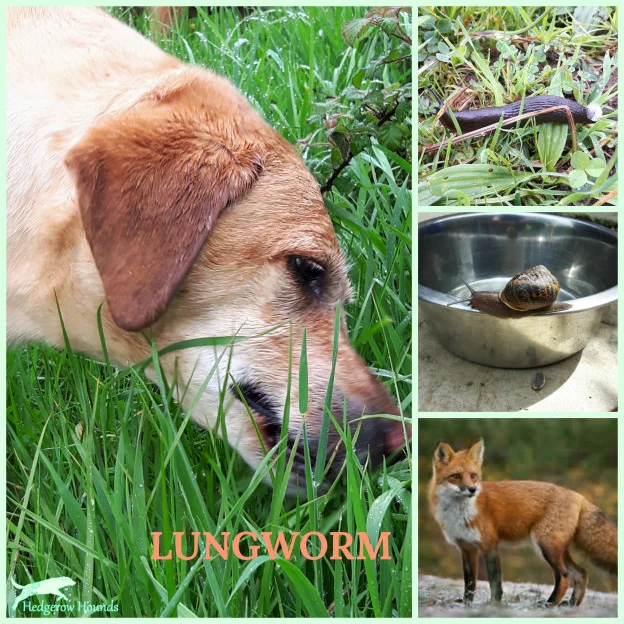
Lungworm is becoming an increasing threat to dogs all across the UK due to a number of reasons including a milder and wetter climate and the increase in the number of urban foxes covering a larger area.
There are three main types of lungworm that dogs are most likely to become infected with:
Oslerus osleri (dog lungworm), Crenosoma Vulpis (fox lungworm) and Angiostrongylus vasosum
The lungworm needs a host such as a slug, snail, fox or sometimes a frog in which to grow and develop. The dog then, sometimes accidentally, eats a slug possibly on blades of grass, on a dog toy or water bowl or comes into contact with infected fox poo.
Approximately 3 days later the larvae can be found in the dogs stomach and then they proceed to migrate to the lungs where they continue to mature until they can lay thousands of eggs which are coughed up and are passed via the dogs faeces. The only difference with fox lungworm is that the mature worms live in the airways of the lungs and the trachea.
The parasite doesn`t pass directly from dog to dog, and other dogs in a household can be completely unaffected by it. The larvae do however pass out in the faeces of the infected dog so there is the potential for the infection to be spread that way.
Slugs and snails are partial to dog poop so if it is left out in the open they will crawl all over it and consume some, therefore becoming infected by the larvae and if eaten by a dog or a fox the cycle starts again. So it is crucial that any dog poo is picked up immediately before slugs and snails have access to it. Also avoid leaving water bowls outside at night and bring in any bones or dog toys to prevent contamination.
The biggest worry with lungworm is that occasionally there are no symptoms present until the disease is at a critical level, hence the importance of taking a regular worm count.
There are many symptoms that are usually present these include :
General lethargy and intolerance to exercise
Breathing difficulties and noisy breathing
Loss of weight even though the food is increased
Sore throat, swallowing hard and developing a cough or gag reflex
Staring into space and a change of temperament, unusually unsettled
Discharge or bleeding from the nostrils
Chest infection or pneumonia
Pale mucus membranes of the eyes and gums
Excessive bleeding even from a tiny wound and blood shot eyes
Collapse and seizures
The easiest way to regularly test for lungworm is by a faecal count. If your dog has had lungworm before or you are in an area of high risk then it is advised to test every 3-4 months or sooner should any tell tale symptoms appear.
The company I use is www.wormcount.com and I can highly recommend them.
Due to the fact that lungworm don`t shed larvae every day it is necessary to collect a small sample from 3 days worth of poo in the hope that they are shedding on one of those days. If your dog has had lungworm it is really important to send off another test within 3 months as they may still be carrying the worms but they were not shedding larvae on those particular days of testing. There will be a blood test available shortly which gives results with 15 minutes which is obviously a great help if your dog is showing severe symptoms by that stage and a speedy diagnosis can be life saving. Currently the faecal results take from 1-3 days to come back.
Although the fox lungworm can cause serious breathing problems and additional complications it rarely causes death unlike the other types of lungworm, but it should always be treated as an emergency to prevent the deterioration of the disease.
Due to the fact that the larvae are only in the stomach for a short while there is a short window of opportunity to influence them with alternative prevention before they migrate to the lungs and trachea. If products such as Verm-x or Four seasons are used it is usually necessary to give a larger or more frequent dose when preventing lungworm, so it is recommended that the product manufacturers are contacted for the dosage in this case.
These natural products are useful to use as a prevention but should NOT be used to treat a confirmed case of lungworn infection.
Caroline Hearn MICHT, Dip.ICAT, Dip.MLD
Canine and Equine Sports & Holistic Practitioner
Feeding Raw Bones
When choosing a raw bone for your dog, take into consideration, their size, feeding style (ie: greedy), behaviour and their experience of eating bones.
Feeding raw bones can be a concern for some owners.
Here we explain the best bones to start off with and what to consider when feeding bones to your individual dog.

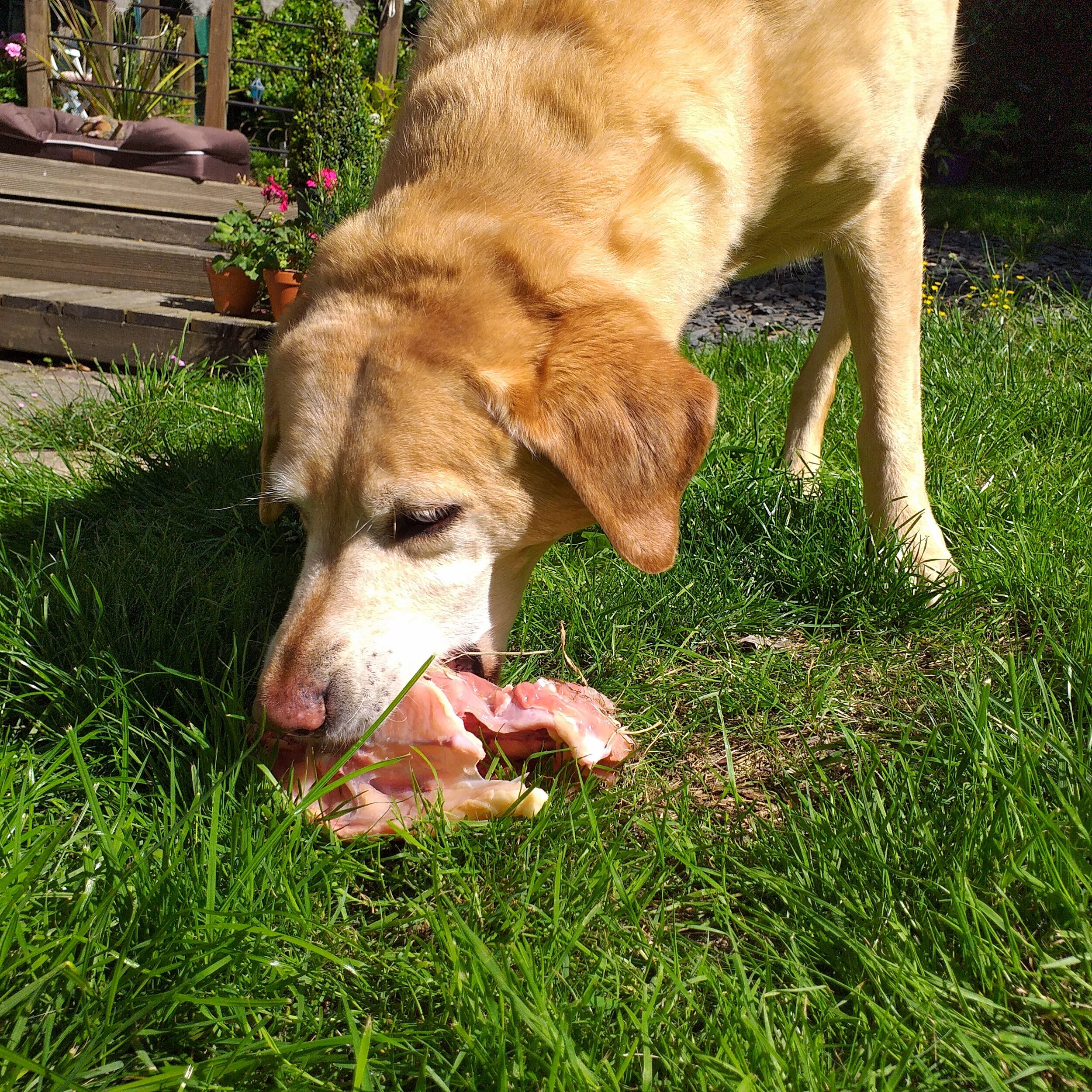
Edible bones, such as this raw chicken carcass, go towards the daily bone ration and are the ideal starter bone for pups, young dogs and beginners. They are soft, flexible and contain a lot of cartilage.
Bone is a very important part of feeding a raw food diet, but it is a subject that can cause worry and concern for the dog owner and often a reason people decide to rule out raw feeding altogether.
The inclusion of raw bone in the diet provides nutrients such as calcium, phosphorous, magnesium, fat soluble vitamins, amino acids and essential fatty acids, all of which are used by the body for blood and bone formation. Calcium is regarded as a macro-mineral and is the most abundant and essential mineral in the body. It isn`t just needed for optimum skeletal growth but also responsible for the correct functioning of muscle and nerve impulses, keeping the immune system healthy and regulating the heartbeat.
Meat contains high levels of phosphorous and very little calcium so feeding a diet of only meat and offal would be extremely deficient in vital minerals as well as giving the dog loose stools.
Our dogs anatomical features:
So what has nature blessed a dog with to make him so efficient at eating and digesting bone?
Just a glimpse inside a dog’s mouth will show a whole range of “tools” to make the job of piercing, tearing and slicing meat and bone an easy task. A pair of specialised teeth for crushing, called the Carnassial are the largest and most jagged of the premolars and you will notice your dog tilting his head on the side in order to bring them into full use.
Unlike ourselves and herbivores, a dogs jaw has no sideways, grinding action, so in order to add lubrication within the mouth and around the food there is a lot of saliva production to assist its transit to the stomach. Once in the stomach there is an incredibly strong stomach acid to not only help kill any bacteria but also to dissolve raw bone.
Edible vs Recreational
Raw bones are split into two categories of edible and recreational bones.
Edible bone is consumed completely in one sitting and adds towards the dog’s dietary calcium requirements. Examples would be chicken necks and wings, duck feet, lamb ribs, pigs trotters, chicken carcass or the finely ground bone within a minced complete meal.
Recreational bones are not completely consumed within one sitting and add little if anything towards the dietary calcium requirements. These would be something like a large beef knuckle bone or a venison neck as an example. The main advantage of these large bones is that they keep the teeth clean and also provide the psychological benefits that come with the chewing action, such as a release of serotonin, dopamine and oxytocin, which are the calming and feel good hormones.

Recreational bones are for teeth cleaning and also release feel good hormones as the dog chews them. They are not included as bone content, as they are not consumed in one sitting.
With 90% of dogs in the UK under 3 years of age having some form of periodontal disease and needing a general anaesthetic to remove a build-up of plaque on an annual basis, kibble despite what we are lead to believe, does not clean teeth. If you watch a dog eat kibble they gulp and swallow, there is certainly no abrasive grinding taking place in order to keep the teeth plaque free.
Potential issues with certain bones:
If ever there is a problem with bones it is generally due to feeding a bone which is too small for your particular dog, leaving the dog unsupervised or giving very rigorous chewers weight bearing bones.
Chicken wings: Better suited for small dogs as medium and large dogs or those that are greedy feeders, can try and swallow them whole and due to the shape of the wings, carry a choke risk.
Marrow bones: The central marrow is extremely high in fat and can cause diarrhoea. They tend to be weight bearing bones so are extremely hard, which in very vigorous chewers can cause tooth fractures. There is the danger of the bone encircling the lower jaw when it has been chewed down into a “ring”, often requiring veterinary assistance. Dispose of the bone long before this risk is a possibility.
Neck bones: Chicken and duck necks are better for smaller dogs unless you can guarantee your larger dog will not swallow them whole. I have seen dogs do this on a number of occasions, with no negative consequences whatsoever as their strong stomach acid made short work of digesting it, but it is better that they chew them first. The necks have a good covering of meat on the bone and turkey and goose necks are ideal for medium to large breeds and provide a meal in themselves.
Vertebral bones: Bones that form the neck and vertebral column in larger animals such as sheep and venison, when eaten right down will become circular and have a higher risk of causing choke. This also applies to ox tail. If your dog has a reliable leave command then you can remove the bone when it starts to become eaten down into smaller sections.
Ribs: If ribs are fed from young animals such as lamb or beef then they are soft and contain a good amount of central red marrow and you will find that dogs can crunch them up with ease. The only potential problem and why it is essential to supervise your dog when they eat bones, is that they can very occasionally become stuck across the roof of the mouth and require assistance to remove them.
Avoid:
There are some pet stores that still sell large baked knuckle bones for dogs. They are often sourced from overseas and are extremely dangerous due to the likelihood of cooked bones splintering and causing perforations to the gut often with fatal consequences. Raw hide chews are also a major choke hazard and are known to cause obstructions in the bowel which require emergency surgery.
Choosing the right bone for your dog:
The main problem area when introducing raw bones to a dog is not offering a bone that is appropriate in size or type for that individual dog. It is always better to feed a bone that is a little too large than too small and also pair the bone with the chewing style of that particular dog.
If you are transitioning a dog onto a raw diet that has previously been eating kibble and you plan to feed edible bones then it is wise to leave 2-3 weeks before introducing whole bones to give the stomach acid time to adjust in order to adequately digest raw bone. Your dog will still be receiving his calcium ration from the complete minces that contain 10% finely ground raw bone.
Raw chicken or duck carcass are good starter bones as they still contain some meat on the bones and plenty of cartilage making them flexible and easy to crunch. They are usually from young birds which mean that the bones are still quite soft.
If your dog is straining to pass a motion or the stool is very white and crumbly then you know that they have too much bone content in their diet and you will need to re-evaluative the percentage. The majority of dogs do well on 10% - 12% bone in their diets with no issues.
If you feed raw mince which contains the standard 10% bone, be mindful when also giving whole edible bones alongside. This will mean that your dog could have too much bone in their system at once causing constipation or gut problems. If you want to feed the occasional whole edible bone then give a mince that has no bone content for that day.
Multiple dog households:
This can certainly be a big challenge for some owners and even the most placid dog can see a raw bone as the highest valued item he has ever been in possession of. If you have a dog that shows strong resource and food guarding behaviour then offering a raw bone of any type could be a tricky situation so unless you are working through this particular type of issue with a qualified behaviourist it is wise not to put the dog in that situation.
Every dog has to be treated as an individual character in order for things to run smoothly. Some will strut around for ages showing everyone their “prize”, others will just take the bone off into the garden and bury it, you may have a dog that becomes very protective of such a precious item and then there are those greedy ones that will chew until their mouths bleed or the nervous dogs whose motto is “if it`s in my stomach then no one else can get to it” and attempt to swallow the bone whole rather than risk it being taken off them by another dog or their owner. Offering the bone or trachea when it is directly out of the freezer can help slow the consumption down.
If you have a number of dogs with very individual ways of tackling a bone then it can prove extremely difficult to manage and the only safe way is for them to be sectioned off in their own safe space where they can relax and enjoy their bone. Edible bones tend to be eaten within minutes, so they are less of an issue than the recreational bone which can be around for days on end.
When whole raw bones are just not an option.
It is really important that you feel confident and happy in providing your dog with nourishing meals. If feeding whole bones, edible or otherwise causes you to panic and worry and is creating friction and tension within your four legged family, then just don’t feed them whole bones.
If you are giving complete meals where muscle meat, offal and ground bone is added for you, then your dog will be getting the calcium they need. If the percentage is not clear on the product label then ask the manufacturer, as it should be between 10-12 % ground bone. The raw bone is finely ground so it is unlikely you will notice it when dishing up and your dog will have no trouble digesting it.
Semi frozen tracheas are a good alternative to bones, especially for seniors or those with missing teeth, large dogs need the beef version while small dogs can manage the lamb.
If recreational bones are not fed and even tracheas cause problems then you will have to resort to other ways of keeping their teeth clean via a toothbrush or micro-fibre cloth and dog friendly toothpaste.
www.hedgerowhounds.co.uk
Eggs are great for our Dogs !
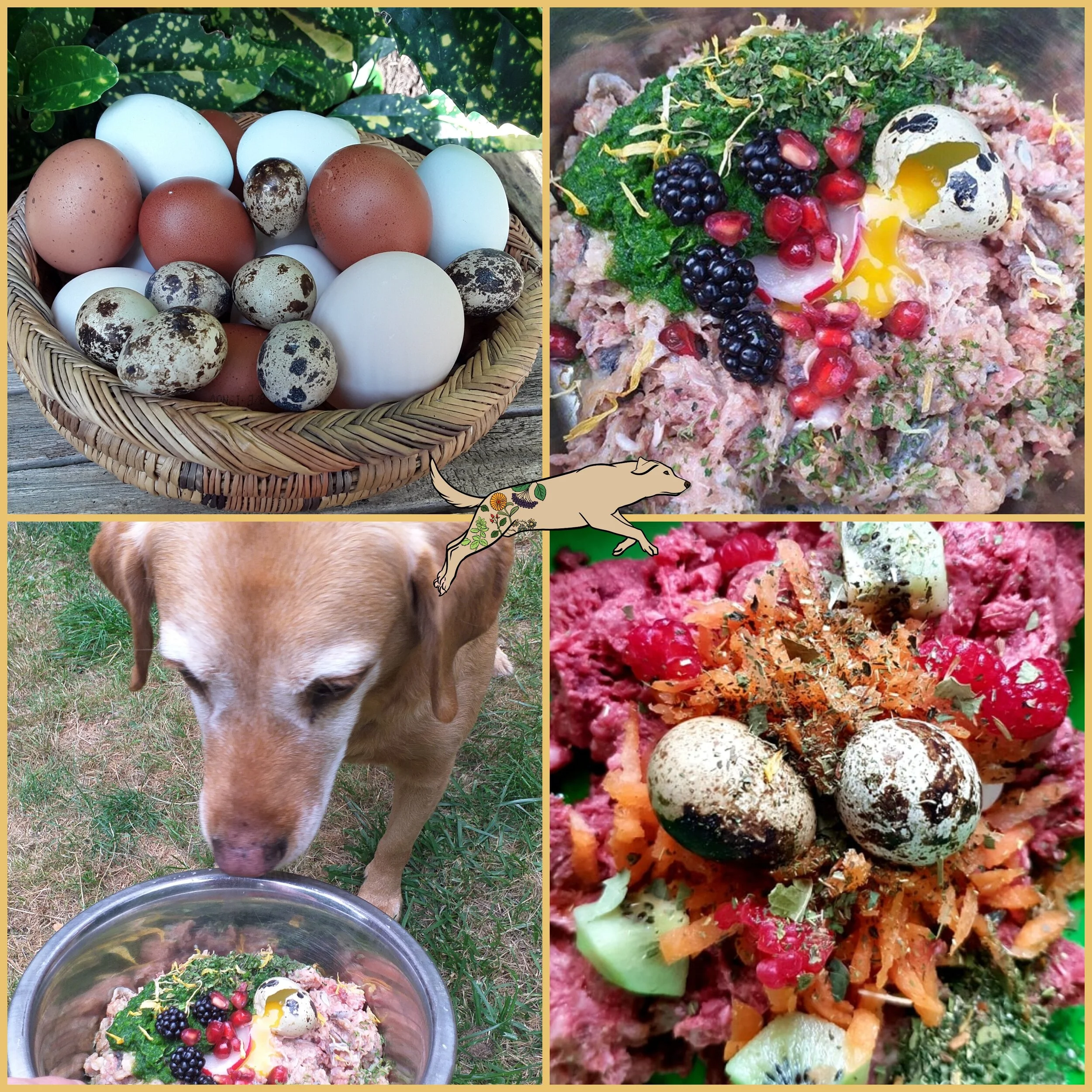
Either fed raw or lightly cooked, eggs are a valuable addition to our dogs diet.
Eggs provide a high quality, complete source of amino acids which are the building blocks of protein.
A good source of vitamin A, B12, Riboflavin, Iron, Folate, Zinc, Selenium, Fatty acids, Choline, Fat soluble vitamin E,D and K and provide the ideal ratio of calcium and phosphorous, if the shell is also fed.
Just one egg will provide 13 essential vitamins and minerals, including lutein which is essential for eye health. Egg whites contain a substance called avidin which affects the uptake of biotin, but the egg yolk has high levels of biotin. So, unless you are feeding just the egg whites on a regular basis rather than the whole egg there shouldn’t be an issue.
Egg shell can be used as a calcium supplement, and the inner membrane of the egg contains an abundance of nutrients to support joint health. This opaque membrane will provide collagen, elastin, glucosamine, chondroitin and hyaluronic acid.
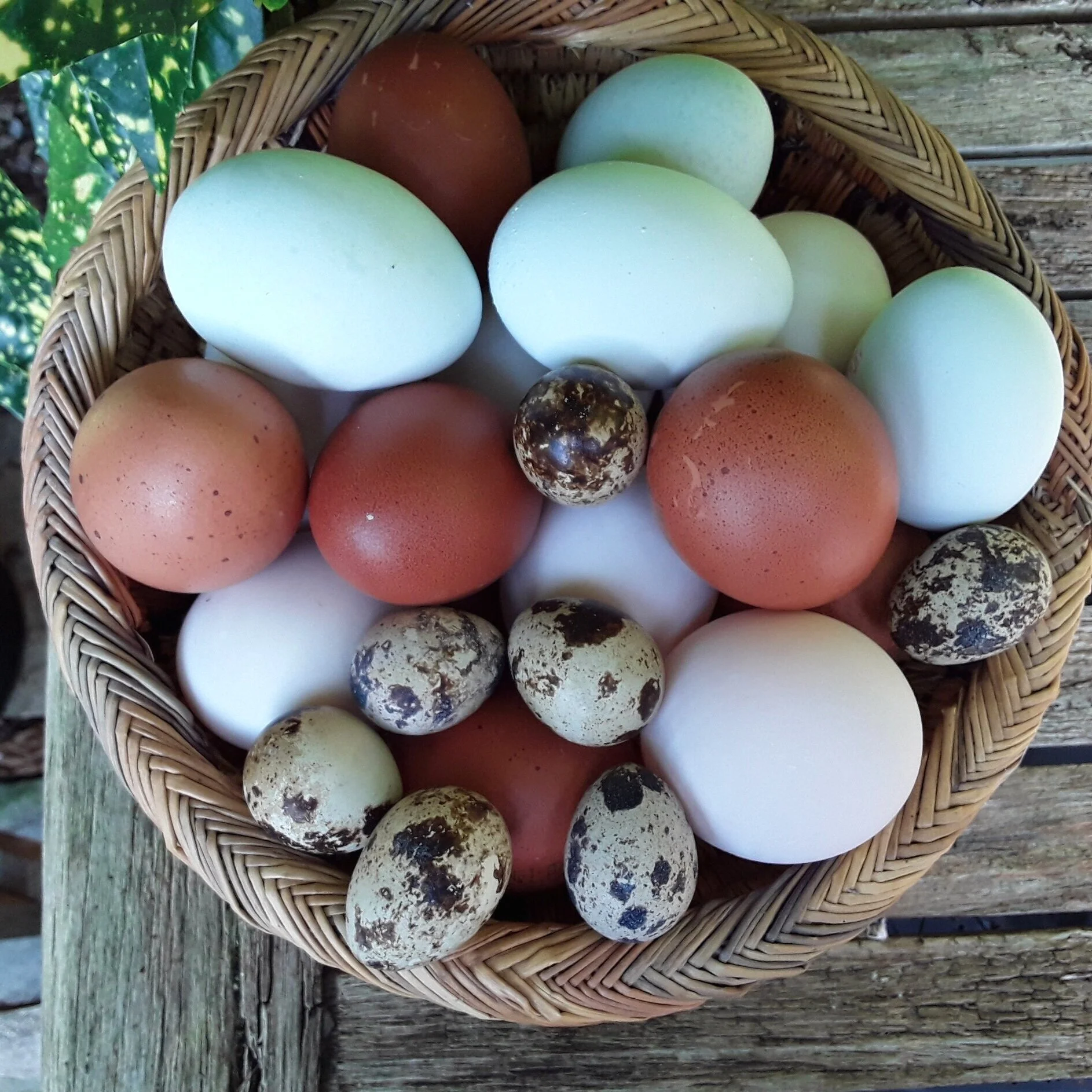
Feeding a selection of eggs including chicken, duck, quail and guinea fowl will offer a broader range of nutrients. One thing that is essential, is that the eggs must be free range and preferably organic as these are higher in animal welfare as well as offering higher levels of the anti-inflammatory Omega 3 fatty acids. These free range birds will have benefitted from a natural lifestyle of foraging, had sunlight on their backs and lived a more relaxed life.
The eggs pictured are from a local farm shop where the hens & ducks can be seen roaming free. The eggs are higher in nutrition as the birds have access to a natural lifestyle of foraging and I know that the shells haven`t been sprayed with chemicals unlike many supermarket eggs, which is important if you are going to feed the shells.
Duck eggs have a larger yolk to white ratio and are higher in protein, fat and contain more Omega 3.
Quail eggs although tiny, have large amounts of vitamin B1 and 5 times as much iron and potassium as hens eggs. Their protein value is 13% where as hens eggs are 11%. Quail eggs rarely cause allergies or sensitivities so worth considering if eggs normally cause problems.
Your dog will benefit from eating free range organic eggs 2-3 times a week.
Eggs can be offered whole, either raw or lightly cooked or broken onto your dogs usual food. If you would rather cook them then a scrambled or boiled egg very lightly cooked will be well received.

There are almost 200 different breeds of chickens in the world, and one hen will lay anything between 250 and 300 eggs a year !
www.hedgerowhounds.co.uk
Winter Care for Your Horse - The Holistic Approach
Horses are trickle feeders and designed to have forage passing through their gut most of the time. Eating hay, not only provides warmth, as it ferments in the hind gut, but also reduces the risk of colic and gastric ulcers.
Caring for horses over the winter months brings many challenges, not least copious amounts of mud, frozen taps and bored horses confined to their stables.

Here are a few helpful tips while we eagerly await springtime, which also comes with its own issues, but that is another story!!
Forage & Hard Feed: Horses are trickle feeders and are designed to have forage passing through their guts for most of the time. Eating hay not only provides warmth, as it ferments in the hind gut, but also reduces the risk of colic and gastric ulcers.
Varying the position and ways in which hay is fed in the stable by tying haynets in different locations and also placing hay on the ground or in trug buckets, allows the horse to stretch down in a natural grazing position rather than constantly pulling at haynets, invariably from one side, causing muscle imbalance and soreness.
Senior or dentally challenged horses can still get plenty of fibre by feeding the soaked hay replacer, this tops up hydration levels too. It also provides some variation to any horse’s diet if they are confined to the stable for most of the day.
If your horse lives out then it may be necessary to provide hay, particularly if there is snow on the ground. If there are multiple horses then ensure there are more piles laid out than there are horses, as one horse can guard many piles at once, causing fights or stress to others.
If the horse is not being worked then the hard feed will need to be reduced and more fibre added to the diet.
Water is a particularly important consideration in the wintertime and especially for the stabled horse. Adequate hydration is essential for normal digestion and how the food moves along the gut. Limited water intake can increase the risk of impaction colic.
To encourage drinking and correct levels of hydration, make sure all troughs are clear of ice, top up indoor buckets with hot water, include un-molassed soaked sugar beet in the feed and offer steamed or soaked hay.
If your stable has automatic drinkers, put a bucket of water in as well so you can monitor the horses drinking. As a guide, a 16-hand horse will require a minimum of 6 gallons of water a day. Having free access to a salt lick is also helpful.

Providing ample clean water is just as important in Winter as it is in Summer.
Exercise: Some horses spend huge amounts of time confined to a stable, dependant on their owners to ride or turn them out in a paddock. Even if your horse has daily turnout, the winter months can mean, due to floods, mud, snow and ice, that turn out is either impossible or very limited.
Movement is needed for efficient digestion, to aid circulation, maintain muscle tone and normal joint function.
If you are lucky enough to have a school then you can probably keep on riding if the surface allows or certainly work the horse in hand on the lunge or better still long reins. Allow more time for warm up before moving onto trot and canter to prevent injury.
In hand walking is very valuable and you can allow the horse to pick at some grass and weeds and stretch their heads and necks down if they spend a lot of time eating from raised mangers and haynets. Two or three short wanders a day will also break up the monotony if they are stuck in due to the weather. Make sure the conditions underfoot are safe and clear any areas of snow and ice.
Boredom: Horses are social animals that are evolved to move, and in the wild will often cover 20 miles in a day within a herd. They are foragers, browsers and capable of forming close friendships and many are kept in an unnatural environment which is geared more towards what is convenient for us rather than what is best for them.
Horses do suffer from depression and boredom if they can’t carry out some of their normal behaviour. This can be more so in the winter months as their routine changes.
We can help to relieve boredom in several ways. Including making more daily visits to them or arranging a rota with other liveries, so each horse gets attention, a treat ball or small section of hay placed in the stable. Some horses love having the radio on, classic fm is a good one, calming music and some talking seems to be a good choice.
Picking grass, herbs such as cleavers (great for lymphatic circulation) dandelion leaves (urinary health) and tucking them in the hay can add interest as can hiding carrots, parsnips and apples tucked into haynets. Swedes hanging from string can provide hours of entertainment too.

The new Hedgerow Horse seasonal blend is ideal to replace the herbs, berries and seeds that the grazing horse would normally forage for. It is available on the Hedgerow Hounds shop.
Hedgerow Horse has a seasonal range of herbs including an Autumn-Winter blend called Foragers Harvest which provides herbs and berries that a horse would naturally forage for if they had free access to them.

Horses can form lasting friendships with field companions and will miss the interaction when confined to a stable.
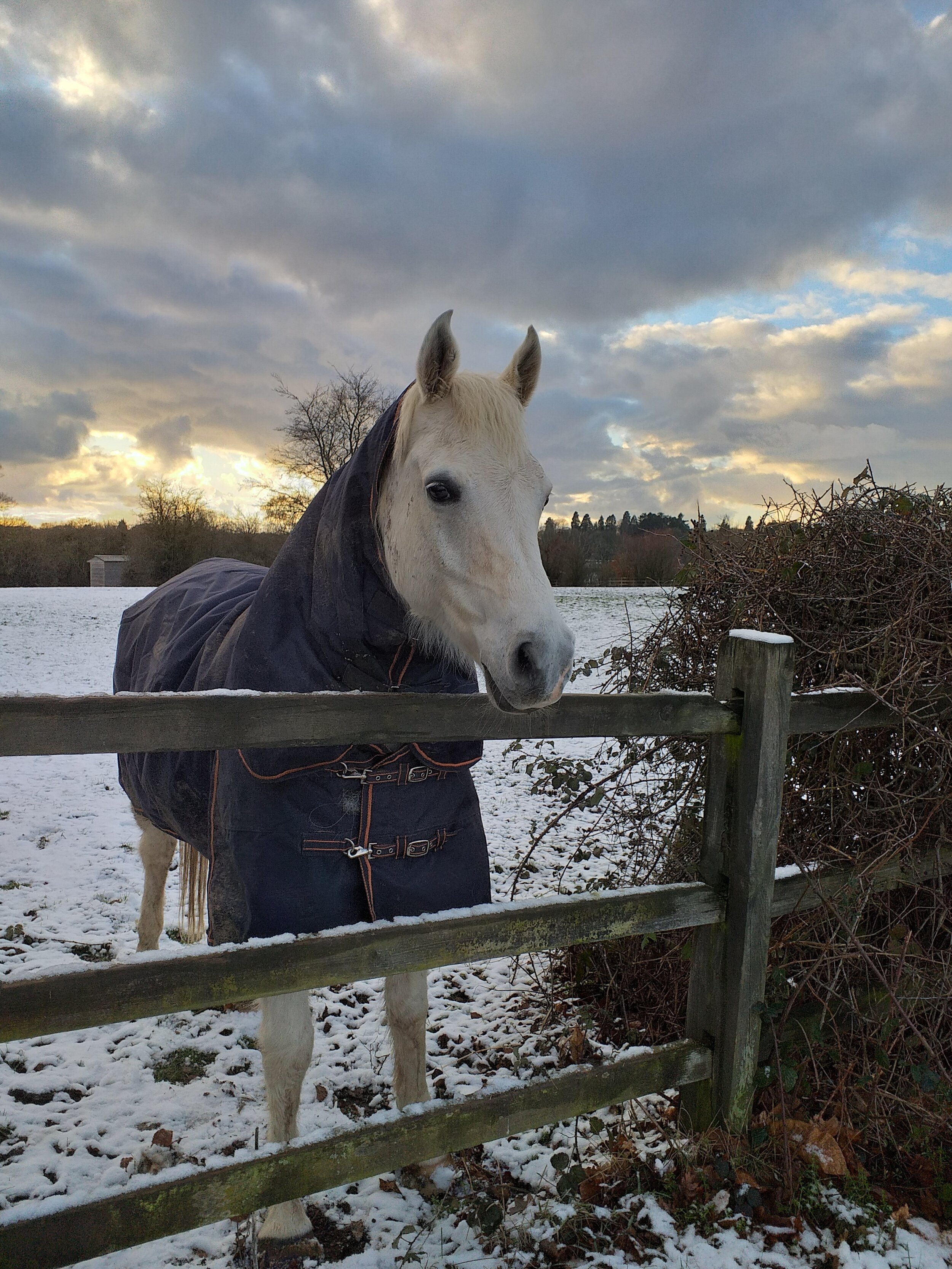
Rugs: It is important not to over rug your horse. Horses that are clipped, underweight or elderly will benefit from wearing an appropriate rug, both in the stable and also when out in the field. Make sure any rugs used are comfortable and fit well, but also remove them everyday to check they are not causing sores, particularly over the wither area. This is also a good opportunity to evaluate the overall bodily condition of the horse.
Skin issues: Unfortunately winter conditions are not kind to the skin. I have found Leucillin and Green Clay an absolute godsend for treating mud fever, minor injuries, skin complaints and preventing infection taking hold. A must have for your winter first aid kit. Both can be found on the Hedgerow Hounds shop with details on how to get the best out of using them.

Green Clay, once tried you will never want to be without it. Perfect for horses, dogs, cats and all livestock.
Hang on in there Spring is just around the corner !!
Find out more at : www.hedgerowhounds.co.uk
The Facebook page @HedgerowHorse
Or on Instagram hedgerow_horse